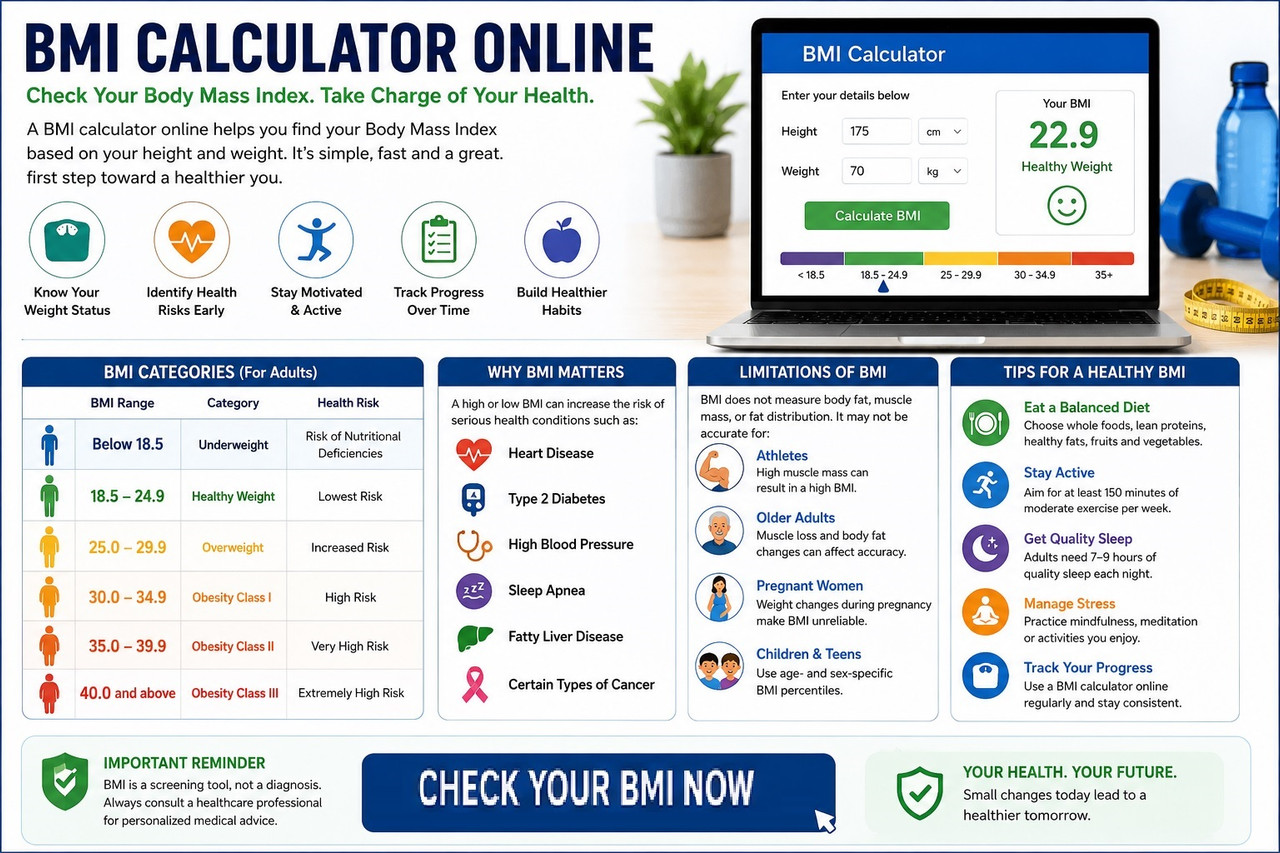
TL;DR: A BMI calculator online is a fast and reliable tool for estimating Body Mass Index based on your height and weight. It helps determine whether your weight falls within a healthy range and identifies potential risks associated with being underweight, overweight, or obese. Although BMI does not directly measure body fat or overall fitness, it remains one of the most widely used screening methods by healthcare professionals worldwide. For the most accurate understanding of your health, combine BMI with body composition, waist circumference, regular exercise, balanced nutrition, quality sleep, and routine medical checkups to support long-term wellness and disease prevention.
Summary: Using a BMI calculator online is an easy and effective way to monitor your weight status and support better health decisions. It provides instant results that can guide weight management, fitness planning, and preventive healthcare. While BMI has limitations, it remains an internationally recognized screening tool that offers valuable insight when interpreted alongside other health measurements. Maintaining a healthy BMI through balanced nutrition, regular physical activity, stress management, and consistent lifestyle habits can reduce the risk of chronic diseases and improve overall quality of life. Regular monitoring empowers individuals to make informed choices for lifelong health and wellness.
A BMI calculator online is a digital health tool that calculates your Body Mass Index (BMI) using your height and weight. The result helps determine whether your weight falls within a healthy range and can identify possible risks associated with being underweight, overweight, or obese. While BMI does not directly measure body fat, healthcare professionals worldwide use it as a quick screening method alongside other health indicators.
What is a BMI calculator online?
A BMI calculator online instantly calculates your Body Mass Index from your height and weight. It helps adults determine whether they are underweight, at a healthy weight, overweight, or obese. Although BMI isn't a complete measure of health, it remains one of the world's most widely used screening tools for weight-related health risks.
Introduction
Maintaining a healthy weight is one of the most effective ways to reduce the risk of chronic diseases and improve overall well-being. A BMI calculator online provides a simple, fast, and reliable way to estimate whether your body weight falls within a healthy range by comparing your height and weight. It has become one of the most commonly used screening tools by healthcare professionals, fitness trainers, nutritionists, and individuals who want to monitor their health.
Whether your goal is weight loss, muscle gain, or maintaining a balanced lifestyle, understanding your Body Mass Index (BMI) gives you valuable insight into your current health status. While BMI is not a direct measurement of body fat, organizations such as the World Health Organization (WHO), Centers for Disease Control and Prevention (CDC), and National Institutes of Health (NIH) recognize it as an effective first-step screening tool for identifying potential weight-related health risks.
If you want an accurate and instant result, you can use this BMI calculator online
What Is Body Mass Index?
Body Mass Index (BMI) is a numerical value calculated from a person's height and weight.
The formula estimates whether your body weight is appropriate for your height.
Although BMI cannot distinguish between muscle and fat, it remains one of the simplest methods for identifying possible health risks associated with excessive or insufficient body weight.
Healthcare providers often combine BMI with additional measurements such as:
- Waist circumference
- Body fat percentage
- Blood pressure
- Cholesterol levels
- Blood glucose
- Medical history
- Physical activity level
These factors provide a more complete picture of your overall health.
How Does a BMI Calculator Online Work?
A BMI calculator online automatically performs the BMI calculation after you enter your:
- Height
- Weight
Using the internationally accepted BMI formula, the calculator instantly determines your BMI score and categorizes it into a recognized weight classification.
Unlike manual calculations, online calculators eliminate mathematical errors and provide immediate feedback.
Modern calculators are mobile-friendly, easy to use, and available anytime, making them ideal for regular health monitoring.
BMI Categories
| BMI Score | Weight Category | Health Consideration |
|---|---|---|
| Below 18.5 | Underweight | Nutritional deficiencies may occur |
| 18.5–24.9 | Healthy Weight | Lowest disease risk for most adults |
| 25–29.9 | Overweight | Increased health risk |
| 30–34.9 | Obesity Class I | Higher chronic disease risk |
| 35–39.9 | Obesity Class II | Significant health concerns |
| 40+ | Obesity Class III | Highest medical risk |
These ranges are widely used across healthcare systems to identify individuals who may benefit from lifestyle changes or medical guidance.
Why Do Doctors Still Use BMI?
One of the most common questions people ask is:
"If BMI isn't perfect, why do doctors still use it?"
The answer is simple.
BMI is:
- Fast
- Free
- Scientifically validated
- Easy to calculate
- Consistent worldwide
- Useful for screening millions of people
Doctors understand its limitations, but they also know that BMI effectively identifies people who may be at increased risk of health conditions such as:
- Heart disease
- Stroke
- High blood pressure
- Type 2 diabetes
- Sleep apnea
- Fatty liver disease
- Certain cancers
Rather than making a diagnosis, BMI helps determine whether further health assessments are necessary.
Benefits of Using a BMI Calculator Online
Using a BMI calculator online offers several advantages beyond simply knowing your weight category.
Instant Health Assessment
- Results are available within seconds.
- No formulas.
- No calculations.
- Simply enter your height and weight.
Supports Weight Management
Whether you want to lose weight, gain muscle, or maintain your current physique, BMI serves as an excellent baseline for monitoring long-term progress.
Encourages Healthy Habits
Many people begin improving their diet and exercise routine after learning their BMI category.
Understanding your BMI often encourages healthier choices, including:
- Eating nutritious meals
- Exercising regularly
- Drinking enough water
- Improving sleep quality
- Reducing sedentary behavior
Helpful for Preventive Healthcare
Preventing disease is easier than treating it.
BMI helps identify early weight-related risks before more serious medical conditions develop.
Healthcare providers frequently include BMI in annual physical examinations because it offers valuable insight into overall health trends.
Supports Fitness Goals
Fitness professionals often combine BMI with:
- Body fat percentage
- Muscle mass
- Waist measurements
- Performance testing
This creates a more complete picture of physical fitness than BMI alone.
Is BMI Accurate?
This is perhaps the most frequently searched question.
The answer is:
Yes—but with limitations.
BMI is accurate for calculating Body Mass Index.
However, it is not designed to measure:
- Body fat percentage
- Muscle mass
- Bone density
- Fat distribution
For example:
A bodybuilder may have a BMI of 29, placing them in the "overweight" category, even though they have very little body fat.
Conversely, an older adult with low muscle mass may have a healthy BMI while carrying excess body fat.
This is why healthcare professionals consider BMI a screening tool, not a complete diagnosis.
The best health assessments combine BMI with additional measurements, lifestyle evaluation, and medical history.
Does BMI Measure Body Fat?
A common misconception is that BMI directly measures body fat. It does not.
A BMI calculator online estimates weight status by comparing your height and weight. It cannot determine how much of your body is muscle, fat, bone, or water. This distinction is important because two people can have the same BMI while having very different body compositions.
For example, a professional athlete with high muscle mass may have the same BMI as someone with excess body fat, yet their health profiles can be dramatically different. This is why healthcare professionals often combine BMI with other measurements, such as body fat percentage, waist circumference, blood pressure, cholesterol levels, and blood glucose, to create a more complete health assessment.
Why BMI Is Still Used Worldwide
Despite ongoing discussions about its limitations, BMI remains one of the most trusted screening tools because it is simple, inexpensive, and backed by decades of public health research.
Organizations including the World Health Organization (WHO), the Centers for Disease Control and Prevention (CDC), and the National Institutes of Health (NIH) continue to recommend BMI as an initial screening method for identifying weight-related health risks in adults.
Its greatest strength is consistency. Because the same formula is used worldwide, healthcare providers can compare results across populations, monitor obesity trends, and develop public health strategies.
Who Should Use a BMI Calculator Online?
A BMI calculator online is suitable for most adults who want to understand whether their current weight falls within a healthy range.
It is especially useful for:
- Adults beginning a weight-loss journey
- Individuals monitoring long-term weight management
- Fitness enthusiasts tracking progress
- Personal trainers creating wellness plans
- Dietitians and nutritionists
- Employers running workplace wellness programs
- Healthcare providers during routine health screenings
Children and teenagers should use age- and sex-specific BMI percentile calculators because their bodies are still developing. Standard adult BMI ranges are not intended for children.
When BMI May Not Be Accurate
Although BMI is valuable, it may not accurately reflect health for everyone.
Examples include:
Athletes
Athletes often have greater muscle mass than the average person. Since muscle weighs more than fat, BMI may classify them as overweight even when they have excellent cardiovascular fitness and low body fat.
Older Adults
As people age, they naturally lose muscle mass and may gain body fat. A normal BMI may not always reflect healthy body composition in older adults.
Pregnant Women
Pregnancy causes natural weight changes that make BMI an unreliable indicator during pregnancy. Healthcare providers use other methods to monitor maternal health.
People With High or Low Muscle Mass
Bodybuilders, individuals recovering from illness, or people with certain medical conditions may receive BMI results that do not accurately represent their overall health.
Health Risks Associated With an Unhealthy BMI
Maintaining a healthy BMI is linked to better long-term health outcomes.
Risks of Being Underweight
People who are underweight may face:
- Nutritional deficiencies
- Weakened immune function
- Fatigue
- Osteoporosis
- Reduced muscle strength
- Fertility concerns
Risks of Being Overweight or Obese
Excess body weight has been associated with an increased risk of:
- Type 2 diabetes
- High blood pressure
- Heart disease
- Stroke
- Sleep apnea
- Fatty liver disease
- Osteoarthritis
- Certain cancers
- Metabolic syndrome
While BMI alone cannot diagnose these conditions, it helps identify individuals who may benefit from further medical evaluation.
Beyond BMI: Other Health Measurements That Matter
A healthy lifestyle is about more than a single number.
Healthcare professionals often evaluate:
- Waist circumference
- Body fat percentage
- Blood pressure
- Cholesterol levels
- Blood sugar
- Resting heart rate
- Physical activity level
- Nutrition quality
- Sleep habits
- Family medical history
Combining these measurements provides a more accurate picture of overall health than BMI alone.
How to Improve Your BMI Naturally
If your BMI falls outside the healthy range, gradual and sustainable lifestyle changes are usually more effective than quick fixes.
Eat a Balanced Diet
Choose whole foods such as vegetables, fruits, whole grains, lean protein, legumes, nuts, and healthy fats. Limiting highly processed foods and sugary drinks can support healthy weight management.
Stay Physically Active
Aim for at least 150 minutes of moderate aerobic activity each week, along with strength training exercises on two or more days. Regular exercise supports cardiovascular health, muscle maintenance, and calorie balance.
Prioritize Quality Sleep
Adults generally benefit from seven to nine hours of quality sleep each night. Poor sleep has been linked to weight gain, hormonal imbalance, and reduced energy levels.
Manage Stress
Long-term stress can influence eating habits and physical health. Activities such as walking, yoga, meditation, or spending time outdoors may help improve overall well-being.
Monitor Progress
Using a BMI calculator online regularly allows you to monitor trends over time rather than focusing on daily weight fluctuations.
Common Myths About BMI
Myth 1: BMI Measures Body Fat
Reality: BMI estimates weight relative to height. It does not directly measure body fat.
Myth 2: BMI Is Useless
Reality: While BMI has limitations, it remains one of the most practical screening tools for identifying potential health risks in large populations.
Myth 3: A Normal BMI Means Perfect Health
Reality: Someone with a healthy BMI can still have high blood pressure, elevated cholesterol, poor nutrition, or low physical fitness. BMI should always be considered alongside other health indicators.
Myth 4: BMI Is Only for Weight Loss
Reality: BMI is useful for maintaining a healthy weight, monitoring fitness progress, and supporting preventive healthcare—not just weight loss.
People Also Ask
Is a BMI calculator online accurate?
Yes. A BMI calculator online accurately calculates your Body Mass Index using your height and weight. However, BMI is a screening tool rather than a complete assessment of health because it does not account for muscle mass, body fat percentage, or fat distribution.
Why do doctors still use BMI?
Doctors continue to use BMI because it is fast, inexpensive, standardized, and supported by decades of medical research. It helps identify individuals who may be at greater risk for conditions such as obesity, diabetes, hypertension, and cardiovascular disease.
Is BMI different for men and women?
The BMI formula is the same for adult men and women. However, men and women naturally differ in body composition, muscle mass, and fat distribution. These differences are considered during broader health assessments, which is why healthcare providers use additional measurements alongside BMI.
Key Takeaways
- BMI is one of the world's most widely used weight-screening tools.
- It provides an instant estimate of whether your weight is appropriate for your height.
- BMI does not measure body fat, muscle mass, or overall fitness.
- The best health assessment combines BMI with body composition, waist circumference, blood pressure, nutrition, physical activity, and medical history.
- Regular monitoring, balanced nutrition, exercise, quality sleep, and healthy lifestyle habits contribute to long-term wellness regardless of your BMI score.
Frequently Asked Questions
Is a BMI calculator online accurate for everyone?
A BMI calculator online accurately calculates your Body Mass Index using your height and weight, but the result is only a screening tool. It does not measure body fat, muscle mass, bone density, or where fat is stored in the body. For most adults, BMI is a reliable way to estimate whether weight falls within a healthy range. However, athletes, bodybuilders, pregnant women, older adults, and individuals with certain medical conditions may receive results that do not fully reflect their overall health. Healthcare professionals often combine BMI with waist circumference, body fat percentage, blood pressure, cholesterol, blood sugar, and medical history for a more complete health assessment.
What is considered a healthy BMI?
For most adults, a Body Mass Index (BMI) between 18.5 and 24.9 is generally considered a healthy weight range. A BMI below 18.5 is classified as underweight, while a BMI between 25 and 29.9 indicates overweight. A BMI of 30 or above falls into the obesity category. These ranges are widely used by healthcare organizations worldwide to identify potential weight-related health risks. Although BMI is a valuable screening tool, maintaining good health also depends on balanced nutrition, regular physical activity, quality sleep, stress management, and routine medical checkups.
Why do healthcare professionals still recommend BMI?
Healthcare professionals continue to recommend BMI because it is simple, affordable, and supported by decades of public health research. It provides a standardized way to screen for potential health risks associated with being underweight, overweight, or obese. While BMI is not intended to diagnose medical conditions, it helps identify individuals who may benefit from additional evaluation. Doctors often use BMI alongside waist circumference, body composition analysis, blood pressure, cholesterol testing, and lifestyle assessments to gain a broader understanding of a person's overall health.
How often should I use a BMI calculator online?
For most healthy adults, checking your BMI every one to three months is sufficient. If you are actively trying to lose weight, gain weight, or improve your fitness, you may wish to monitor it monthly to track long-term progress. Daily calculations are generally unnecessary because body weight naturally fluctuates due to hydration, meals, and other factors. A BMI calculator online is most useful when combined with consistent healthy habits such as balanced eating, regular exercise, and ongoing health monitoring rather than focusing on short-term changes.
What is BMI?
Body Mass Index (BMI) is a numerical value calculated from a person's height and weight to estimate whether their weight falls within a healthy range. It is commonly used as a screening tool to identify potential weight-related health risks.
What does a BMI calculator online do?
A BMI calculator online instantly calculates your Body Mass Index using your height and weight. It helps determine whether you are underweight, at a healthy weight, overweight, or obese based on internationally recognized BMI ranges.
Is BMI enough to measure health?
No. BMI is a useful screening tool but should not be used as the only measure of health. Factors such as body fat percentage, waist circumference, muscle mass, blood pressure, cholesterol, physical activity, nutrition, sleep, and medical history provide a more complete picture of overall well-being.
Final Key Takeaways
- A BMI calculator online provides an instant estimate of weight status using height and weight.
- BMI is a screening tool, not a diagnosis.
- Combine BMI with body composition, waist circumference, and other health metrics for better accuracy.
- Healthy lifestyle habits—including nutritious eating, exercise, adequate sleep, hydration, and stress management—are essential regardless of BMI.
- Adults should monitor BMI periodically to observe long-term trends rather than daily fluctuations.
- Trusted health organizations continue to support BMI as a practical first step in identifying potential weight-related health risks.